Best LMS in Kerala: The Complete 2026 Buyer's Guide
 Rafeeque Parakkal
Last updated: August 2, 2026
14 min read
Category: LMS · Kerala · EdTech
Rafeeque Parakkal
Last updated: August 2, 2026
14 min read
Category: LMS · Kerala · EdTech
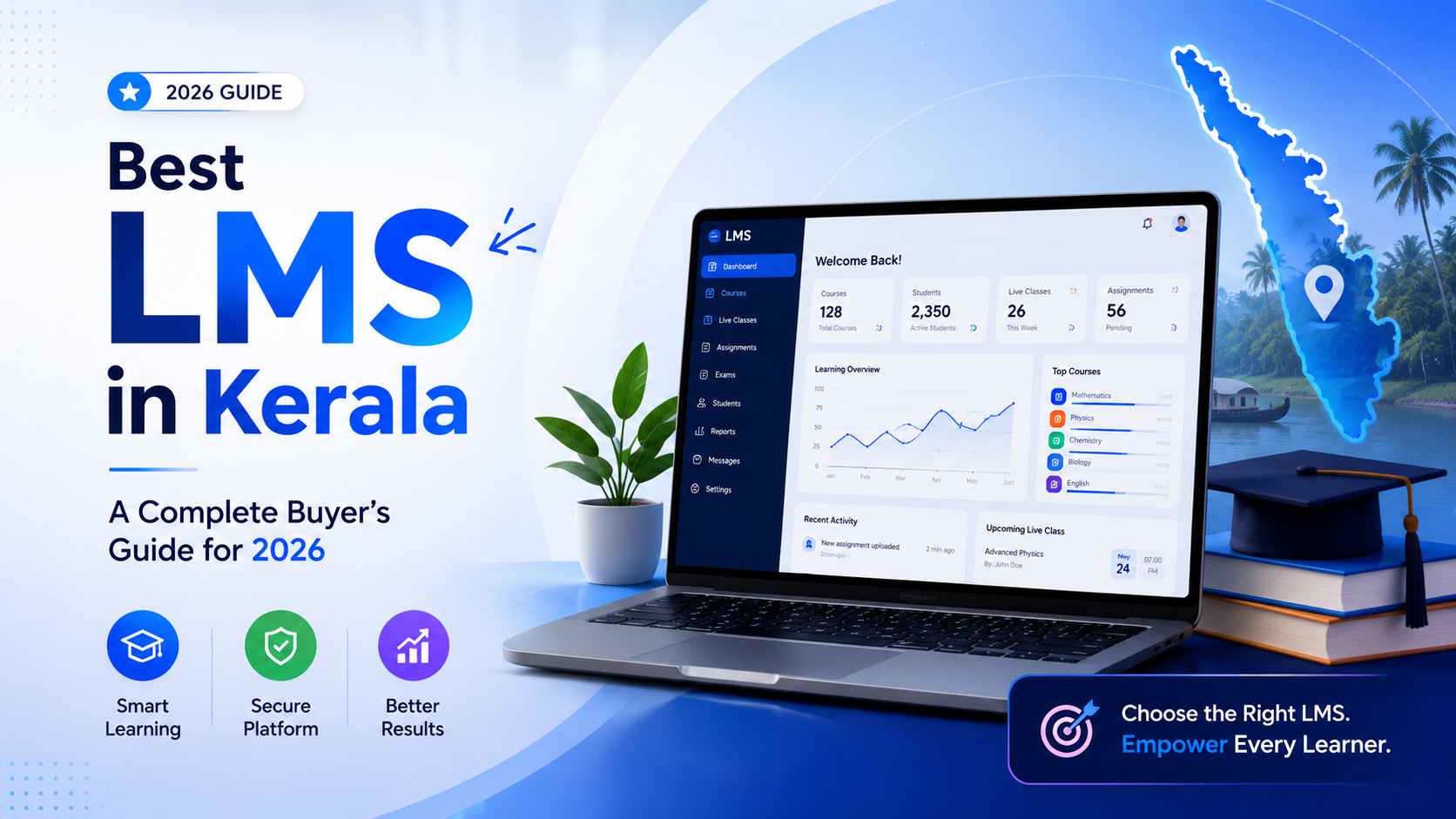
If you run a coaching institute, school, or college anywhere from Kozhikode to Trivandrum, you've probably already asked the question: what is the best LMS in Kerala for my institution? It's not a simple one-size-fits-all answer. A PSC coaching centre in Malappuram has very different needs from a CBSE school in Kochi or a skill-development academy preparing students for national certification exams. This guide walks through exactly how to evaluate a learning management system (LMS) for the Kerala market in 2026 — what features actually matter, what a custom-built platform costs versus a rented one, and how real Kerala institutes are already using LMS platforms to grow.
This guide is written by Rafeeque Parakkal, Founder & CEO of Trogon Media, who has personally overseen the delivery of 200+ learning management systems to institutions across India and the GCC over the last decade. Everything below reflects what we've actually seen work — and fail — for Kerala institutes specifically.
Table of Contents
- What Is an LMS and Why Kerala Institutions Need One
- Kerala's EdTech Landscape in 2026
- Key Features to Look for in an LMS
- Types of LMS Available to Kerala Institutions
- Real LMS Platforms Built for Kerala Institutions
- How Much Does an LMS Cost in Kerala?
- LMS for Different Types of Institutions
- Step-by-Step: How to Choose the Right LMS
- Common Mistakes to Avoid
- Why Work With a Kerala-Based EdTech Consultant
- Frequently Asked Questions
What Is an LMS and Why Kerala Institutions Need One
A Learning Management System (LMS) is software that lets an institute deliver, manage, and track education online — live classes, recorded lectures, study material, quizzes, exams, and student progress, all in one platform. For Kerala institutions specifically, an LMS isn't a "nice to have" anymore; it's become a competitive necessity for a few very local reasons.
First, Kerala's coaching culture is intense and geographically spread out. A strong PSC or NEET coaching brand in Kozhikode wants to reach students in Wayanad, Kannur, and Malappuram without opening five physical branches — an LMS with live classes and a mobile app makes that possible. Second, parents in Kerala increasingly expect digital transparency: attendance records, fee receipts, and exam results delivered instantly through an app, not a notice on a board. Third, since 2020, hybrid learning has gone from an emergency workaround to a permanent expectation — students want the option to rewatch a class, not just attend it once live.
In short, an LMS lets a Kerala institute scale its reach beyond its physical location, retain students with a better experience, and compete with the growing number of digitally-forward institutes entering the market every year.
Kerala's EdTech Landscape in 2026
Kerala has one of India's most literate and digitally engaged populations, and its coaching and tuition industry is unusually large relative to the state's size. Competitive exam coaching — particularly for Kerala PSC, NEET, KEAM, and banking exams — has grown into a major local industry, with well-known coaching brands operating across Kozhikode, Thrissur, Kottayam, and Trivandrum. Because these exams have enormous applicant pools and limited seats, institutes compete heavily on the quality of their preparation material, mock test infrastructure, and doubt-clearing support — all of which now run through an LMS rather than paper and physical test centres.
At the same time, Kerala's state education system and private schools have been steadily digitizing academic and administrative operations — attendance, fee collection, report cards, and parent communication are increasingly expected to run through a single digital system rather than fragmented paper processes. Add to this rising smartphone penetration even in rural districts, and you get a market where an institute without a mobile-friendly digital learning platform is visibly behind its competitors.
The net effect: Kerala's EdTech demand isn't concentrated only in Kochi and Trivandrum anymore. Calicut, Thrissur, Kannur, and Malappuram now have some of the highest density of coaching institutes actively evaluating LMS platforms in the state.
Key Features to Look for in an LMS
Not every LMS feature matters equally for every institute. Here's what we consistently see Kerala institutes actually use and benefit from.
Live Classes & Recorded Lectures
The core of most coaching businesses today. Look for stable low-latency live streaming, chat and hand-raise features, and automatic recording so every live session becomes reusable content in your library — with chapters and resume-watch for students catching up.
Online Exams & AI Evaluation
For PSC, NEET, and KEAM coaching especially, a robust exam engine is non-negotiable: timed tests, large question banks, negative marking, and instant results. AI-assisted evaluation for subjective answers is increasingly expected, since it saves faculty enormous time during peak exam season.
Mobile App (Android & iOS)
A large share of Kerala's student base studies primarily on a phone. If your LMS is web-only, you're already at a disadvantage against competitors offering a dedicated app with offline downloads and push notifications for class reminders.
Attendance, Fees & ERP Integration
Especially for schools, an LMS that also handles admissions, attendance, fee tracking, and parent communication removes the need to juggle multiple disconnected systems.
Gamification & Engagement
Leaderboards, streaks, badges, and points meaningfully improve course completion rates — particularly for long-duration coaching programs where student motivation naturally dips over months of preparation.
AI Mentor & Doubt-Solving
A 24/7 AI mentor trained on your own course material can answer routine student doubts instantly by chat or voice, freeing faculty to focus on complex questions — a genuine differentiator in 2026.
Analytics & Reporting
Institute owners need visibility into which batches are performing well, which students are falling behind, and where drop-off happens in a course — not just raw attendance numbers.
Zoom / Google Meet Integration
Many institutes already run live sessions on Zoom or Google Meet and want their LMS to sit on top of that infrastructure rather than forcing a migration — a practical, lower-friction option during transition.
Types of LMS Available to Kerala Institutions
Broadly, Kerala institutes choose between three approaches. Each has real trade-offs worth understanding before you commit.
| Factor | Off-the-Shelf SaaS | White-Label Platform | Fully Custom-Built |
|---|---|---|---|
| Ownership | Rented, no ownership | Rented, shared codebase | You own the product and data |
| Branding | Limited or none | Your logo on someone else's app | 100% your brand, end to end |
| Customization | Very limited | Moderate, within template limits | Built around your exact workflow |
| Time to Launch | Days | Weeks | Weeks to a few months, depending on scope |
| Cost Structure | Low-cost recurring subscription | Moderate recurring/licensing fee | Higher upfront, no recurring license |
| Best For | Testing the waters, very small institutes | Fast launch with some brand identity | Institutes planning to scale seriously |
Real LMS Platforms Built for Kerala Institutions
Rather than talk in the abstract, here are real examples of custom LMS platforms we've delivered for institutes operating in and around Kerala's competitive exam coaching space:
Upgrade PSC and Vocabspedia are both built specifically for Kerala PSC exam aspirants, with structured study material, live sessions, and realistic mock exams designed around the actual PSC exam pattern. Skillmount and Grow Learn serve the broader skill-development and professional training space, combining live instruction with project-based assessment. All four are examples of institutes choosing a custom-built platform over a generic template — because exam-specific coaching genuinely benefits from a purpose-built experience rather than a one-size-fits-all LMS.
How Much Does an LMS Cost in Kerala?
Pricing varies enormously based on scope, so treat any fixed number you see online with caution. That said, here's how to think about the cost structure:
Off-the-shelf and white-label platforms typically charge a recurring fee — often per student or per month — which stays low initially but adds up as your student base grows, and you're paying it indefinitely with no ownership at the end. Custom-built platforms involve a larger one-time development investment, but you own the resulting product outright, with no per-student licensing fee eating into your margins as you scale.
The biggest cost drivers we see for Kerala institutes are: the number of features required (a basic live-class + exam setup versus a full ecosystem with gamification and AI), whether a native mobile app is included, whether AI features like automated evaluation or an AI mentor are needed, and your expected user scale from day one. Rather than comparing sticker prices from different vendors, ask for a scoped quote based on your actual feature list and expected student count — that's the only way to compare like for like.
LMS for Different Types of Institutions in Kerala
PSC & Competitive Exam Coaching Centres
Need heavy exam infrastructure: large question banks, realistic mock tests, negative marking, rank-based leaderboards, and fast result delivery. Live batches combined with a strong recorded-content library work best given how long PSC preparation cycles typically run.
Schools (School ERP + LMS)
Benefit most from a combined system covering admissions, attendance, fee management, academics, and parent communication alongside the actual teaching tools — reducing the number of separate logins and systems staff need to manage.
Colleges & Universities
Need department-wide course management, role-based access for multiple faculty, and detailed analytics across larger, more complex student cohorts than a typical coaching institute.
Skill Development & Vocational Academies
Favor cohort-based, project-driven course structures with certification tracking, since outcomes are measured by demonstrable skill rather than just exam scores.
Step-by-Step: How to Choose the Right LMS
- Define your goals first, not features. Are you trying to reach students outside your city, reduce faculty workload, or improve exam results? Your goal determines which features actually matter.
- List your must-have features. Separate "must-have" from "nice-to-have" so you don't overpay for capabilities you won't use in year one.
- Decide build-vs-buy early. Use the comparison table above to honestly assess whether your scale justifies a custom build now or later.
- Check mobile and offline support. Ask specifically how the platform performs on low-bandwidth connections, common in parts of Kerala outside major towns.
- Clarify data and code ownership. If you ever want to switch vendors, can you export your student data and content? This is often overlooked until it becomes a real problem.
- Request a live demo or pilot batch. Never commit based on a sales deck alone — run a real batch of students through the platform first.
- Evaluate post-launch support. Ask what happens when something breaks during peak exam season, not just during the sales conversation.
- Compare total cost of ownership, not sticker price. Factor in per-student fees over 2-3 years for rented platforms versus the one-time cost of a custom build.
Common Mistakes Kerala Institutes Make When Choosing an LMS
- Choosing the cheapest option without checking scalability. What works for 200 students often breaks at 2,000.
- Ignoring the mobile experience. A clunky mobile app will lose you students who study primarily on their phones.
- Not owning their own data or platform. Being locked into a rented white-label system becomes painful the moment you want to switch or negotiate pricing.
- Underestimating training and onboarding time for faculty who aren't naturally comfortable with new software.
- Skipping the pilot phase and rolling out to the entire student base on day one, with no way to catch issues early.
- Not planning for AI features that competitors are already rolling out, like automated evaluation and AI-assisted doubt-solving.
Why Work With a Kerala-Based EdTech Consultant
Global LMS review sites rarely understand Kerala-specific realities: the intensity of PSC and NEET coaching cycles, regional language content needs, local payment preferences, and the level of hands-on support institutes expect from a technology partner. Rafeeque Parakkal has spent over 10 years working directly with Kerala and GCC institutes, delivering 200+ LMS platforms serving 2 million+ end users — and offers vendor-neutral consulting rather than a sales pitch for a single product. That means the recommendation you get is based on what actually fits your institute, not what maximizes a vendor's commission.
Not sure which LMS approach is right for your institute?
Book a free 30-minute consultation with Rafeeque Parakkal to get a straight answer, not a sales pitch.
Frequently Asked Questions
What is the best LMS for coaching institutes in Kerala?
There is no single "best" LMS for every coaching institute — the right choice depends on your student volume, exam type (PSC, NEET, KEAM, banking), and whether you need live classes, recorded content, or both. Institutes with 500+ students and a distinct brand identity generally benefit most from a custom-built LMS, while smaller institutes just starting their digital journey may begin with a lighter, ready-made platform before upgrading.
How much does it cost to build a custom LMS in Kerala?
Custom LMS development cost in Kerala varies widely based on features, the number of user roles, whether a mobile app is included, and AI capabilities such as automated evaluation or an AI mentor. Ready-made subscription platforms usually cost less upfront but charge ongoing per-student fees, while a custom build has a higher one-time cost but you own the platform outright with no recurring licensing fees. It's best to get a scoped quote based on your specific requirements.
Can I get an LMS with a mobile app for my coaching institute?
Yes. Most modern LMS platforms built for Kerala coaching institutes include native Android and iOS apps alongside the web dashboard, so students can attend live classes, watch recorded lectures, take exams, and track progress from their phones — which is essential given how much of Kerala's student population studies primarily on mobile.
Is a custom LMS better than a white-label platform?
A custom LMS gives you full ownership of the code, data, and brand experience, and can be built exactly around your workflows. A white-label platform is faster and cheaper to launch but you're renting someone else's product, which limits customization and can become a problem if the vendor changes pricing or shuts down. Institutes planning to scale beyond a few thousand students usually find a custom build pays off over time.
Do Kerala schools need a separate ERP and LMS, or one combined system?
Most schools are better served by a combined School ERP + LMS system, since it unifies admissions, attendance, fee management, academics, and parent communication with the actual teaching and learning tools in one dashboard, rather than maintaining two disconnected systems that don't share data.
How long does it take to build a custom LMS?
A focused MVP with core features like live classes, recorded content, and exams can typically go live in a matter of weeks when development follows an agile, milestone-based process. Full-featured platforms with gamification, AI evaluation, and mobile apps take longer, depending on scope.
Can an LMS include AI features like an AI mentor or automated evaluation?
Yes, AI is now a standard consideration for modern LMS platforms. Common AI features include automated subjective-answer evaluation, an AI mentor or chatbot that answers student doubts using your own course material, adaptive practice difficulty, and performance analytics that flag at-risk students early.
Which Kerala cities have the most demand for LMS platforms?
Calicut (Kozhikode), Kochi, Thrissur, Trivandrum, Kannur, and Malappuram all have strong demand for LMS platforms, driven by dense clusters of PSC, NEET, and KEAM coaching institutes as well as schools and colleges digitizing their operations.
Rafeeque Parakkal
Founder & CEO of Trogon Media Private Limited. EdTech consultant, LMS consultant, and AI-in-education strategist with 10+ years of experience and 200+ LMS platforms delivered across India and the GCC.